
Mother’s Day – What to Buy (A Three Knife Gift Set maybe…?)
Mother’s Day, or Mothering Sunday if you prefer, is coming up pretty soon – Sunday 11th May is the date to mark in your diary if you haven’t already done so. Although Mother’s Day is a recognised day in most countries around the world, there is singular disagreement on what day it should be. Mother’s Day in the UK is the fourth Sunday in Lent, which was 30th March this year (oh dear missed it), and in the US it is observed on the same day as in Australia. In fact there are a total of thirty different days around the world celebrated as Mother’s Day, although a sizeable majority do share the second Sunday in May date.
Opinion is also very divided on whether it should be celebrated or not. Many people believe that it’s just an opportunity for restaurants, florists and other giftware businesses to make a bit of a fuss and a lot more money (apparently it’s the biggest retail spending day after the Christmas period).
According to Wikipedia, the day was first celebrated in 1908, when a lady called Anna Jarvis marked the day and then started a campaign to persuade the US government to have a public holiday on that day. Interestingly, although she got what she wanted in 1914, within a few years she was already a bit disillusioned by the commercialisation that followed.
Jarvis was also quite particular about how it should be celebrated – the position of the apostrophe was important to her, as she wanted each individual mother to be honoured and celebrated, not a collection of mothers (so Mother’s Day it is).
As you might expect, some countries around the world object to the capitalist nature of Mother’s Day, instead opting to celebrate their mothers on International Women’s Day, which is March 8th in most, but not all countries. Some mark both (good one, Ukraine).
According to market data analysts IBISWorld, Australians spent $1.4 billion on their mothers on Mother’s Day last year, which was up 2.7% on the previous year – an average spend of $77.21 per mum. Dads do very poorly in comparison, with only $37.05 spent per dad on Father’s Day.
The biggest benefactors from this spending bonanza in 2013 were cafes and restaurants, with so called ‘pampering options’ such as massages or beauty services seeing the biggest increase over the previous year, growing 5.5%. $298 million was spent on eating out, $193.4 million splashed out on flowers, shopping vouchers accounted for $134.3 million and cosmetics $131.9 million. Chocolates – surprisingly – were well down the list, with only $43.7 million spent, in fact less than was spent on the ‘homeware’ category.
Homeware items – kitchen utensils and the like – are tarred a little with being ‘household chore’ items and not appropriate for a hard working mum, but they still performed better than chocolate.
Perhaps, with the raft of cooking show on the TV, we’re witnessing a move away from these sorts of gifts being seen as ‘keeping mum in the kitchen’ to more of a ‘let’s give mum all the really good tools so she can compete in Masterchef next year’ mentality. We’d like to think so anyway. Because what better gift could you get for your Masterchef (or of course My Kitchen Rules) obsessed mum than the tools to let her show her skills and panache? A set of I.O. Shen knives maybe? Or a Nirey electric sharpener? Maybe leave the Bolt Action knife for Father’s Day, and help bring up the average spend on dads!
Check out our special Mother’s Day Gift Offer – Save $114.95 on the I.O.Shen 3 Knife Gift Set!
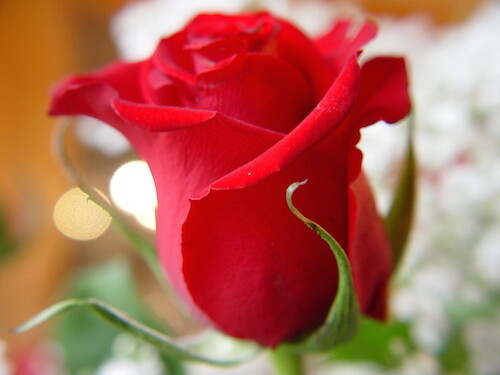
Image credit: http://commons.wikimedia.org/wiki/File:Happy_Mothers_Day_(2352111649).jpg